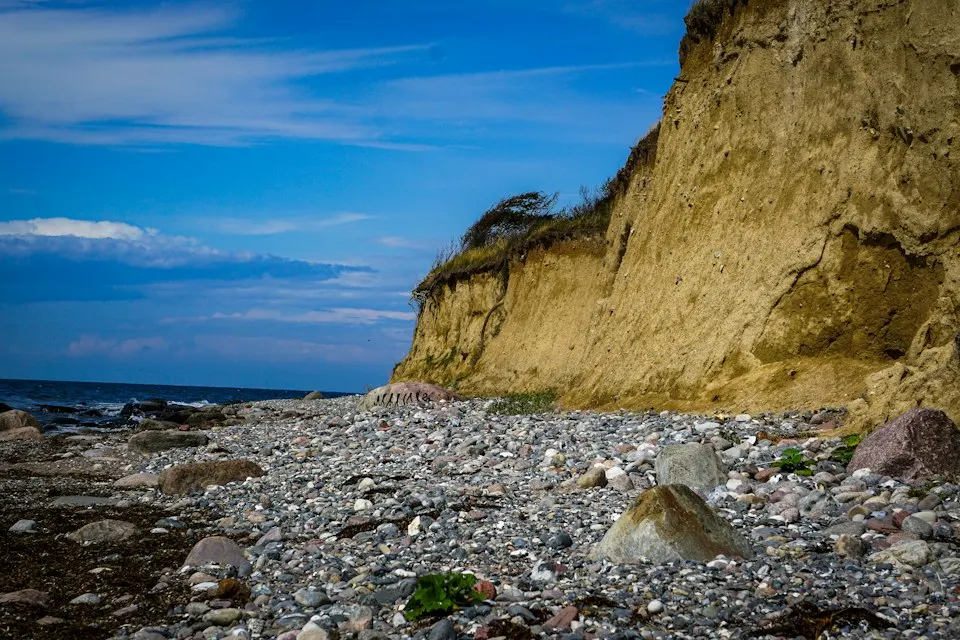
Fossil forecast · cliffs after storms
Checking where the storm undercut the cliffs…
The index uses wave energy hitting the foot of each cliff and time since the storm peak.
Loading the forecast…
Fossil coasts worldwide
Where the cliffs give up fossils
Tap a pin to see the forecast for that cliff.
How to read the index
Storms undercut the cliff foot and wash out fresh fossils. The best time is a few hours after the storm peak. Outside the Baltic we measure the storm against the usual waves at each spot.
Never stand under an overhang or on a fresh landslide. Many coasts have collecting codes and ban digging into the cliff; each cliff page lists them.
Do not miss the next window
The best windows last a few hours: after a storm, after rain, on a clear night with an active Sun. Sign up and we will email you when the index at your spots goes above 60.
Guides
- Fossils on the Baltic Coast of Poland: Where to Look
Where storms wash belemnites, sea urchins in flint and other fossils out of the cliffs on the Polish coast, and where collecting is banned. - Belemnites, the Thunderbolt Stones: How to Find and Identify Them
What a belemnite is, how it differs from amber and an ordinary pebble, and where on Polish beaches to look for these Cretaceous fossils. - Sea Urchins and Sponges in Flint: How to Spot Them on the Beach
How to tell a fossil sea urchin or sponge in flint from an ordinary stone: shapes, patterns, simple tests and places on the Polish coast. - When to Look for Fossils on the Baltic Coast: Storms and Thaw
The best time for fossils is a few hours after a storm peak and during a thaw. How our index works and what a fresh slump looks like. - Fossil Hunting on the Polish Coast: Rules and Cliff Safety
Where you may collect fossils, where parks and reserves ban it, and how to avoid a slump under a cliff. The rules step by step. - Can you sell Baltic fossils from Poland? Prices, rules and tax
What belemnites, flint sea urchins and trilobites from Polish beaches are really worth, where to sell them, where collecting is banned and how tax works.
Forecast for every cliff
- Pobierowo
- Trzęsacz
- Rewal
- Niechorze
- Dziwnówek i Łukęcin
- Ustronie Morskie
- Jarosławiec i Wicko Morskie
- Jastrzębia Góra i Rozewie
- Chłapowo
- Gdynia Orłowo
- Gdynia Babie Doły
- Charmouth
- Lyme Regis, Monmouth Beach
- Seatown
- Kimmeridge Bay
- Whitby
- Saltwick Bay
- Robin Hood's Bay
- Staithes
- Compton Bay
- Minster-on-Sea
- Walton-on-the-Naze
- Hunstanton
- Cape Arkona (Vitt)
- Kühlungsborn
- Stevns Klint
- Møns Klint
- Fur, Knudeklint
- Cap Blanc-Nez (Escalles)
- Calvert Cliffs State Park
- Venice, Caspersen Beach
FAQ
Where are the best fossil beaches?
The Jurassic Coast (Charmouth, Lyme Regis), the Yorkshire coast, Stevns and Møns Klint in Denmark, and Calvert Cliffs in Maryland. Each has its own rules.
When is the best time to look for fossils?
A few hours after a storm that hit the cliff, and after winter rain when the cliff slumps. Go on a falling tide and keep away from overhangs.
Can I keep the fossils I find?
Usually yes for loose finds on ordinary beaches. Some places require you to record or report important finds, for example danekræ in Denmark, and reserves ban collecting.