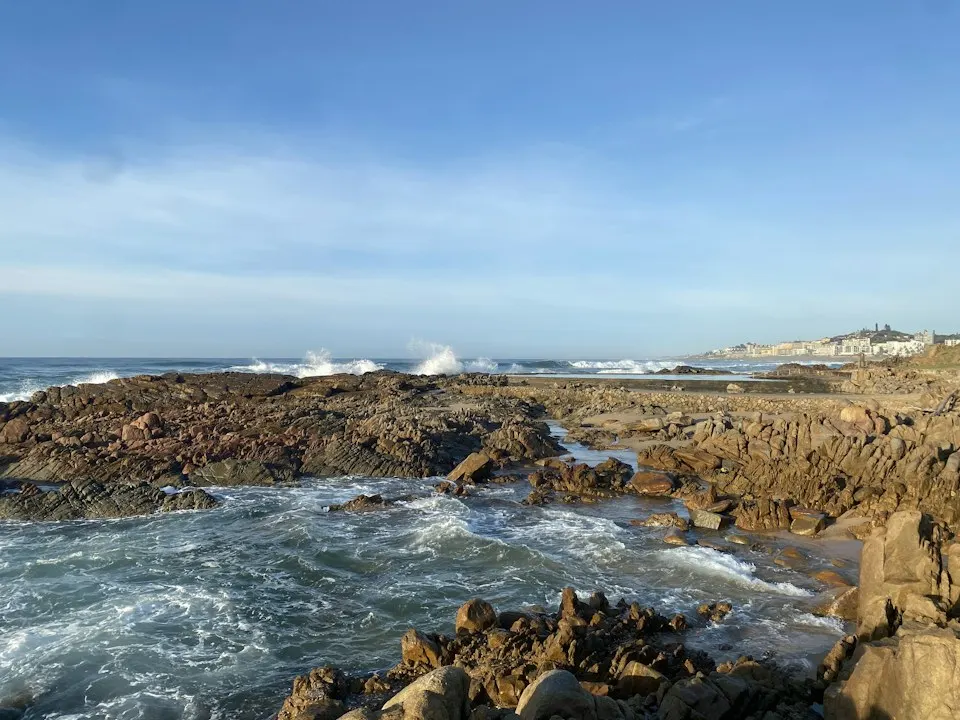
Rockpooling means looking at the life in the pools the sea leaves between rocks at low tide. You need no kit or knowledge to start. A good low tide, shoes with a firm sole and some patience are enough.
What lives in rock pools
A rocky shore has zones. The upper part is only underwater at high tide, and the lower part only uncovers on the biggest low tides. The further down you go, the more life you find, because lower shore animals cope with air and sun for less time.
- Anemones. The most common is the beadlet anemone, a red blob of jelly on the rock. Underwater it opens its tentacles.
- Crabs. Shore crabs hide under stones. Hermit crabs live in empty snail shells.
- Fish. Small gobies and blennies sit in crevices and freeze when a shadow falls on them.
- Echinoderms. Starfish, brittle stars and sea urchins live mostly lower on the shore.
- Sea snails. Limpets stuck to the rock, periwinkles and colourful top shells.
- Prawns. Almost transparent; you only see them when they move.
- Sea slugs. Small, colourful nudibranchs. Hard to find, easy to remember.
- Seaweeds. Wracks on the upper and middle shore, kelps at the very bottom, red seaweeds in the shade.
At West Angle Bay in Wales lives a small green cushion star, Asterina phylactica, only described by science in 1979. On the limestone of Hook Head in Ireland you can see fossil crinoids next to the pools. Every coast has something of its own.
When to go
The best time is a spring low tide, a day or two after new or full moon. That uncovers the lower shore with the richest life. Arrive an hour before low water and follow the falling tide down. A calm sea matters as much as a low tide: in a big swell water washes over the ledges and you cannot see into the pools.
In summer, spring low tides fall in the morning or evening in many places, which suits an outing. In autumn and spring, around the equinoxes, the low tides are the biggest of the year. You can check times in the tides for beginners guide and ready-made windows in the tide forecast.
How to look
- Stand by a pool and wait a minute. Animals that hid when they saw you come back out.
- Look under rock overhangs and into crevices. It is damp and cool there.
- Lift a stone gently, look at its underside and put it back exactly as it was. A stone left upside down is a death sentence for what lived under it.
- Use a white tray or tub of seawater for a closer look. Keep it in the shade and change the water.
- Pick a crab up from behind, by the shell, with your fingers at the sides. That way its claws cannot reach you.
The rules: the Seashore Code
British wildlife organisations use a simple code. In the Wembury conservation area it reads like this: look at animals where they are or briefly in a container of seawater, quickly put them back where you found them, do not use nets, do not kill or take any animals, and leave rocks and seaweed as you found them.
- Do not pull anemones or limpets off the rock. They are easily damaged.
- Do not take animals home. They soon die in an aquarium.
- Watch where you step, because more lives underfoot than you can see.
- Reserves have extra bans. For example, the Seaford Head reserve by Hope Gap bans all foraging.
Look after yourself too. On sandy beaches in warm water a weever fish with venomous spines may lie buried. Wear shoes.
What to bring
- Shoes with a firm, grippy sole. Seaweed on rocks is very slippery.
- A white tub or bucket, a hand lens, perhaps a seashore field guide.
- A phone in a waterproof case and the low water time written down.
- Warm clothes, even in summer. It is windy on an open shore.
Safety
The most common problem is not the waves but the incoming tide cutting off your way back. Watch the time and start back at low water. Do not stand under cliffs, because rock falls, especially chalk. In a big swell keep away from the seaward edge of the ledges. A single bigger wave can sweep a person off even on a fine day.
Where to start
For a first trip, pick a place with flat ledges and an easy way down. In England, Wembury in Devon and Kimmeridge Bay in Dorset are well documented. In Brittany wide fields of rock uncover at Roscoff and on the Île de Batz. In Ireland the Pollock Holes at Kilkee are worth a visit. Each spot page has the local rules and the current low tide forecast.
Learning with others
Many centres run guided sessions: Wembury Marine Centre in Devon, Dorset Wildlife Trust at Kimmeridge, local groups in Brittany. The Wildlife Trusts also run Shoresearch, where volunteers survey species on the shore. It is a good way to learn to name what you see.
Sources
- Wembury Marine Centre, Seashore Code
- Devon Wildlife Trust, Rocky Shore Guide (PDF)
- The Wildlife Trusts, rock pooling
- Sussex Wildlife Trust, Seaford Head
- Angle, Pembrokeshire (West Angle Bay), Wikipedia
- Dorset Wildlife Trust, Fine Foundation Wild Seas Centre
Do not miss the next window
The best windows last a few hours: after a storm, after rain, on a clear night with an active Sun. Sign up and we will email you when the index at your spots goes above 60.