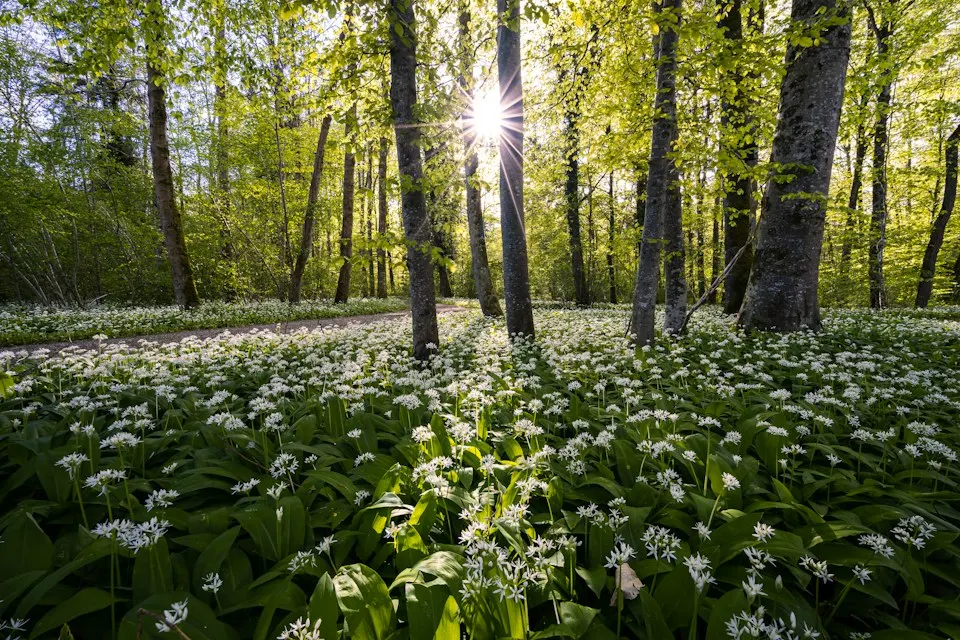
Wild herbs have short windows. Young nettle tops are good for a few weeks, elderflower for about two, and a lime tree flowers for around ten days. This calendar is for lowland central Europe, such as Poland or Germany. In mountains and in the north, shift it 2 to 3 weeks later. In mild Atlantic areas such as Wales or western France, shift it 2 to 3 weeks earlier.
How to read the calendar
The right time depends on the part of the plant. Leaves are usually picked young, before flowering, while they are tender. Flowers are picked early in flowering, while they are fresh and fragrant. Fruit is picked fully ripe. Roots are dug in autumn or early spring, but only in your own garden or with the landowner's consent, because digging plants up is banned or restricted in most countries.
Our index combines this calendar with the day's weather. The best score comes from a dry morning after rain, with no frost and no heat. Pick once the dew has dried but before the sun gets hot. Wet herbs sweat and spoil in the basket, and in heat they wilt and lose their scent.
Month by month
| Month | What to pick | Notes |
|---|---|---|
| February, March | chickweed, first dandelion leaves, garlic mustard, wild garlic in mild areas | After a mild winter chickweed grows almost all year. |
| April | nettle, dandelion, garlic mustard, ground elder, sorrel, wild garlic | The best month for young leaves. In Poland wild garlic is protected, so use cultivated plants there. |
| May | sorrel, wood sorrel, white dead-nettle, dandelion flowers, first elderflowers | The end of the young nettle season. |
| June | elderflower, large-leaved lime, wild strawberries, dog rose petals, meadowsweet | Pick elderflower on a sunny day, when the scent is strongest. |
| July | small-leaved lime, wild thyme, wild marjoram, yarrow, bilberries, meadowsweet | Peak flowering for meadow herbs. |
| August | bilberries, wild marjoram, yarrow, first elderberries | Elderberries only when fully black, and always cooked. |
| September | elderberries, rosehips, juniper, nettle seeds | Cut nettle patches regrow and give a second crop of leaves. |
| October, November | rosehips, juniper, dandelion root (in your garden) | Rosehips soften after the first frost. |
Spring: young leaves
In spring, speed matters. Pick nettle when it is 15 to 30 cm tall, and take only the top 4 to 6 leaves. Dandelion leaves are least bitter before flowering. Garlic mustard smells of garlic and grows along hedges and the edges of broadleaf woods. Wild garlic carpets damp woods in Britain, Germany and France from March to May.
Spring is also when the worst mistakes happen. Young leaves of lily of the valley, autumn crocus and lords-and-ladies look like wild garlic and sorrel. Before you start, read our guide to deadly look-alikes.
Summer: flowers
Flowers have the shortest window. Pick elderflower heads when most buds are open but before the pollen starts to drop. Cut whole heads with scissors and keep them loose, never in a sealed bag. Large-leaved lime flowers in June and small-leaved lime in July, usually about two weeks apart. Pick whole flower clusters together with their pale bract.
Wild thyme, wild marjoram and yarrow flower in high summer on dry, warm ground. Cut only the flowering tips and leave most of each plant. Chalk and limestone grassland often holds protected species, and much of it lies in nature reserves, so check a map before you go.
Autumn: fruit
Elderberries ripen unevenly. Pick heads where every berry is black, and strip them from the stalks at home. Raw or unripe berries and the green parts of elder can cause poisoning, so always cook the berries. Rosehips are best after the first frost. A juniper bush carries green and blue-black berries at the same time, and only the blue-black ones are ripe.
Sea buckthorn ripens in September. Wild plants are protected in Poland, so pick from orchards or gardens there.
Weather and picking
- Dry morning after rain: plants are clean, firm and dry quickly after picking.
- Frost: young leaves and flowers blacken. The exception is rosehips, which soften after frost.
- Rain on the day: wet herbs go mouldy in the drier. Wait until they have dried off.
- Heat and drought: flowers go over fast and leaves toughen. Pick early in the morning.
- Strong wind: blows the pollen out of elder and lime flowers. Wait for a calm day.
How to plan a trip
Note where and when you found each herb. Elder, lime and dog rose stand in the same places every year, and flowering dates usually shift by only a week or two depending on the spring. After a warm March the season starts earlier, after a cold one later. Check spring leaves every week, because they toughen quickly. Take scissors, an airy basket and paper bags, one for each species.
Where to read more
We cover the law in our guide on where and how much you may pick, and hygiene and sustainable picking in our guide to clean, sustainable foraging. The list of regions with a live forecast is on the Wild herbs page.
Sources
- Polish Regulation on plant species protection (Journal of Laws 2014 item 1409)
- Sambucus nigra, species account
- Tilia cordata, species account
- Allium ursinum, species account
- Warsaw regional sanitary inspectorate: fox tapeworm and wild berries (Polish)
Do not miss the next window
The best windows last a few hours: after a storm, after rain, on a clear night with an active Sun. Sign up and we will email you when the index at your spots goes above 60.