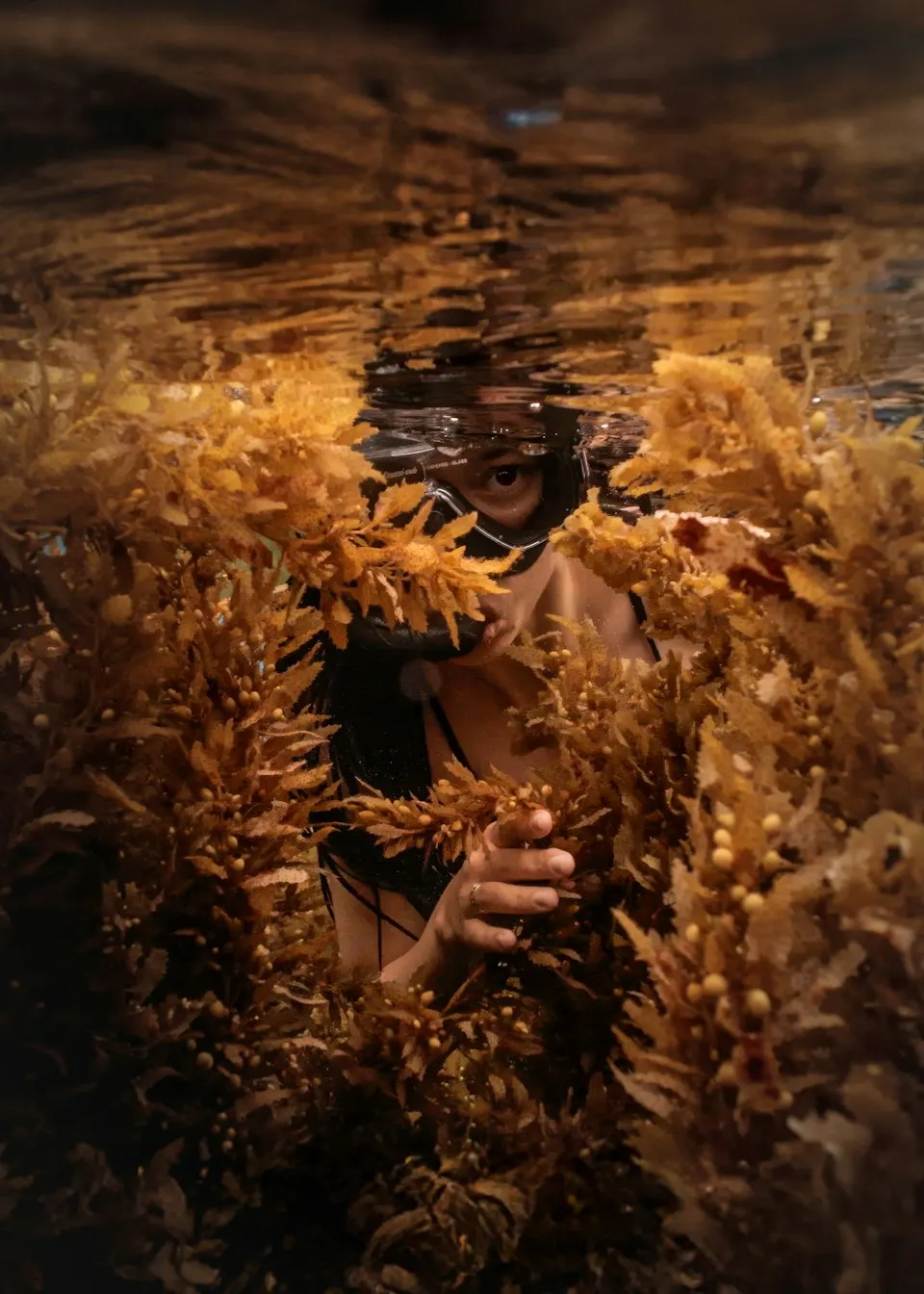
Shore diving in the Polish Baltic means diving with a buddy, towing a dive-flag (flag A) buoy, and staying out of ports, shipping channels and guarded swimming areas. Check the current order of the relevant Maritime Office first.
Where you may dive from shore
Do not dive where ships sail or people swim. That is the general rule. The details are set by the local orders of the directors of the Polish Maritime Offices (urzędy morskie).
- In ports and near them.
- In shipping channels and next to them.
- In guarded swimming areas, especially in the bathing season, around piers and beach entrances.
- In temporarily closed zones, for example near unexploded ordnance.
We describe the rules for each beach on its own page, for example for Gdańsk Stogi or Władysławowo.
Which Maritime Office to check
The Polish coast is covered by the Maritime Offices in Szczecin, Słupsk and Gdynia. Which one applies depends on the stretch of coast. We do not quote regulation numbers, because the orders change.
- The Maritime Office in Gdynia has a page on scuba diving (in Polish) with the local order and wreck lists.
- The Maritime Office in Szczecin publishes local orders (in Polish), including closed zones for diving.
Flag A buoy and diving with a buddy
You tow a dive-flag (flag A) buoy above you. It marks a diver below and keeps boats and jet skis away. Always dive in a pair, never alone.
Tell someone on shore where you are entering and when you will be back. Agree signals and the exit point before you enter the water.
Water temperature and drysuits
Baltic water ranges from about 4 to 18°C, and divers usually wear drysuits (PADI). Roughly, at the surface:
- winter: 2–4°C,
- spring: from about 5°C in April to 12°C at the end of May,
- summer: 16–20°C, with sudden drops when wind pushes warm water away from shore,
- autumn: from about 15°C in September to 8°C in November.
Below 3°C the site shows a warning. From autumn to spring a drysuit and cold-water experience are needed. You will find the current temperature on each beach page.
Visibility in the Baltic
It is usually a few metres, and often under a metre just after a storm. It improves after a few calm days. Summer algal blooms and river mouths make it worse.
We describe the post-storm window separately in the post-storm dive window guide. Our visibility estimate is based on the time since the sea calmed: under a day usually poor, up to 2.5 days average, longer good.
Rip currents after a storm
After a storm, water flows back from the shore in one place and forms a strong rip current. It pulls you out and tires you. Do not fight it: swim parallel to the shore until you are out of the current.
Enter only when the waves have settled. Take care with entry and exit through the surf, because that is the hardest part of a shore dive.
A shore dive plan
- Check the forecast: waves below 0.5 m and wind below 7 m/s are our dive window thresholds.
- Look at the site from the shore. Decide on the entry, the exit and the way back.
- Check the Maritime Office order for that stretch.
- Tell a person on shore your plan, and allow extra time for the cold.
In cold water, regulators can freeze up. Use equipment rated for low temperatures and do not stretch the dive.
Popular entry points
- Gdynia Orłowo has a cliff and a pier and is a popular dive site in the Tricity. In the bathing season, avoid the area around the pier and swimming beaches.
- Puck Bay (Zatoka Pucka), the bay side of Hel, is shallow and sheltered, good for training.
- The Vistula Spit has sandbars and troughs, for example at Jantar. Do not dive at the Vistula mouth: current and poor visibility.
If you combine diving with amber hunting, read amber underwater.
Do not miss the next window
The best windows last a few hours: after a storm, after rain, on a clear night with an active Sun. Sign up and we will email you when the index at your spots goes above 60.