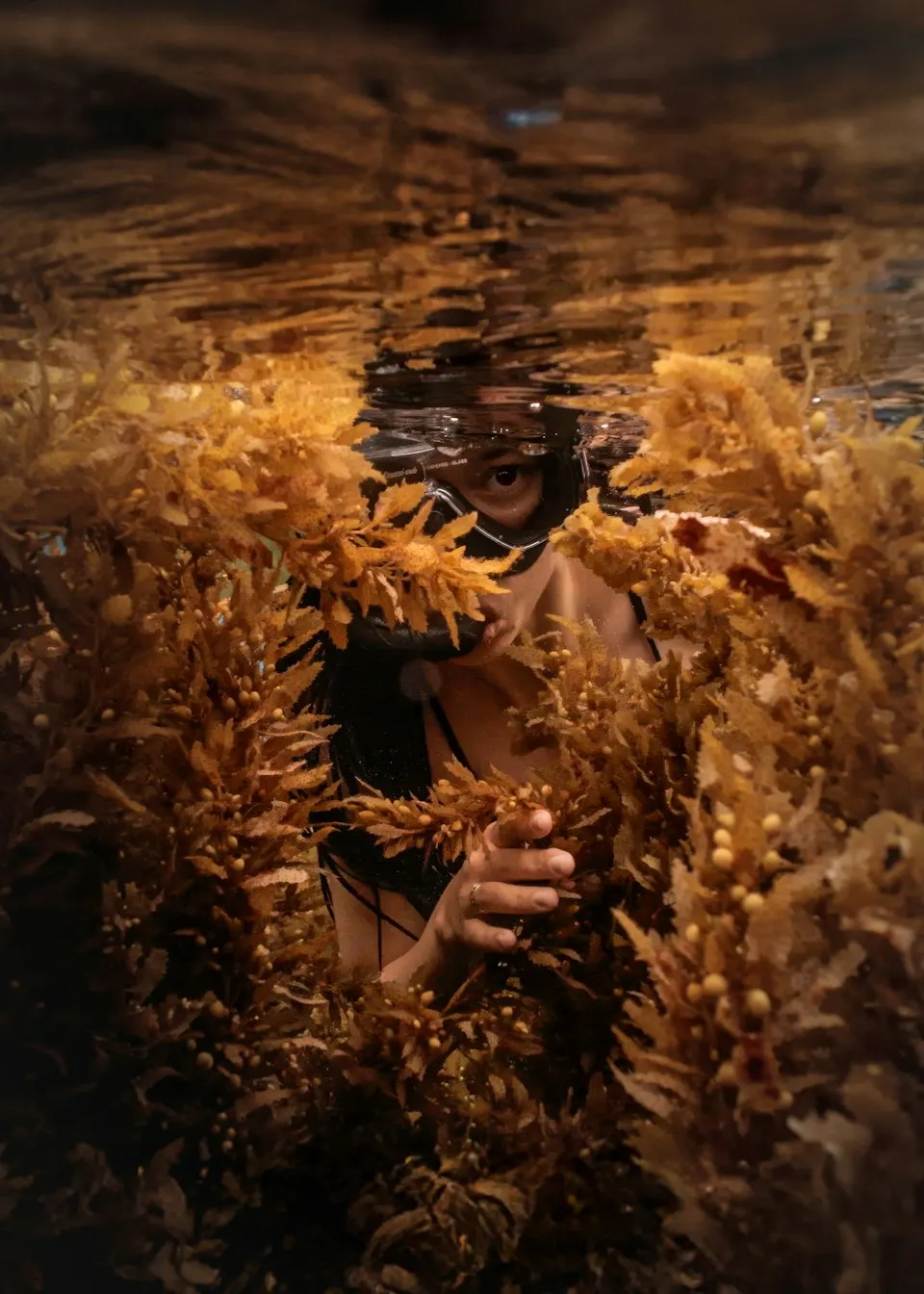
Larger lumps of amber reach the beach less often. Waves move them less than small pieces, so they stay in deeper troughs near the bottom. A diver can reach them. A beach hunter cannot.
Amber travels with the debris
Amber is only slightly heavier than water. Waves carry it along with waterlogged wood, lignite and seaweed. So underwater, look for places where this dark material settles.
Where exactly
- Troughs between sandbars. On the Vistula Spit (Mierzeja Wiślana) there are usually two or three sandbars running parallel to the shore. You can spot a bar by the line of breaking waves. The trough lies behind it, closer to shore. The first trough is usually 1.5–3 m deep, the second 3–5 m.
- Larger lumps lie deeper. Waves move a heavy lump less, so it tends to stay in the second, deeper trough and near its floor.
- Dark layers in the bottom. After a strong storm, the trough floor can be scoured down to older sediment. Dark clay or peat layers and patches of compacted debris appear. This is the best sign.
- Anything hard that sticks out. Old piles, remains of sea defences, tree trunks or wrecks create hollows behind them where material collects.
When
The best window is as an onshore storm dies down, on the day the waves have settled. Within one to three days sand covers the seabed again. Visibility in this window is often poor, which is why we show the dive window separately from the amber index.
In murky water a UV torch helps: amber glows yellowish-white under it.
How to choose where to enter
In the evening, walk the beach and see where the sea left the most debris. That stretch marks a trough that is working, and that is where you enter the water in the morning. You can also see the bars on aerial imagery in the Polish Geoportal: lighter ridges and darker troughs.
Rules and safety
- Polish law lets you collect sea-washed amber for your own use, by hand and without harming nature. Pumps and washing out sand underwater are banned (Bezprawnik, in Polish).
- In Polish national parks (Słowiński, Wolin) collecting anything is banned. Restrictions may also apply in nature reserves and Natura 2000 areas, so check your stretch in the GDOŚ geoportal.
- Do not dive in shipping channels, ports or guarded swimming areas. Tow a dive-flag (flag A) buoy above you. The details are set by the local orders of the relevant Maritime Office (Urząd Morski).
- After a storm, strong rip currents run near the shore. Enter only when the waves have settled, and always with a buddy.
- White phosphorus from munitions turns up on beaches. It looks like pale amber and can ignite once dry. Do not put finds in your pocket. Keep them in a metal container of water.
For the basics of getting in and out, read shore diving in the Baltic Sea. For the wider rules, see amber collecting rules.
Do not miss the next window
The best windows last a few hours: after a storm, after rain, on a clear night with an active Sun. Sign up and we will email you when the index at your spots goes above 60.