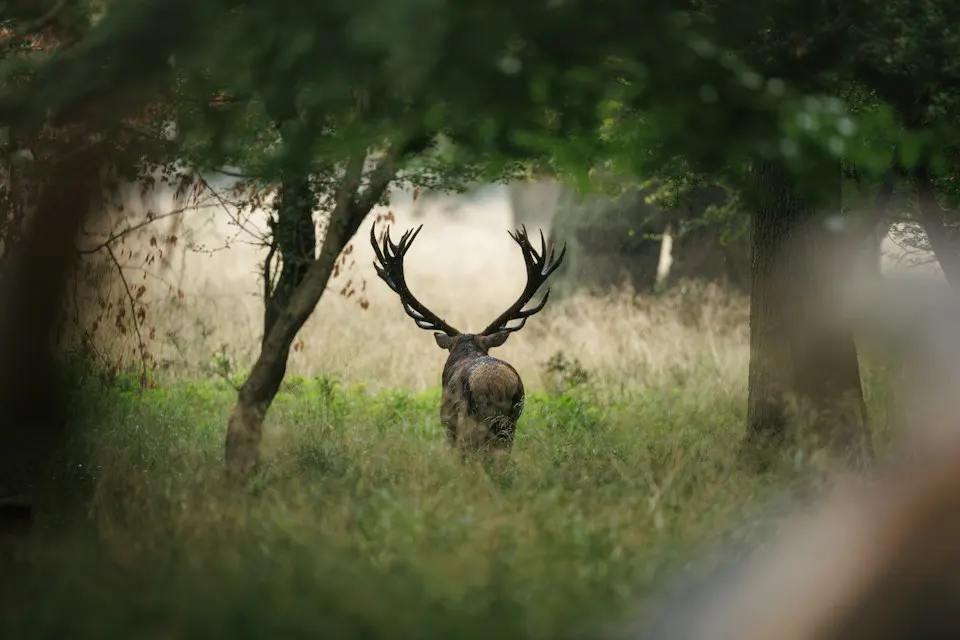
The European bison is the largest land mammal in Europe. Poland has one of the largest populations in the world, and free herds live in several regions. They are easiest to find in winter, when they come out onto meadows and to feeding sites. In summer they stay deep in the forest.
A short history
The bison died out in the wild in the early 20th century. The last free bison in Białowieża Forest was killed in 1919. The species survived only in zoos and private collections. From 1929 a breeding programme in Białowieża worked with a handful of animals, and in the 1950s the first bison were released back into the forest. All of today's bison descend from a small group of ancestors, so every herd matters and strict protection still applies.
Where free herds live
The largest population lives in Białowieża Forest. There are also free herds in Knyszyn Forest, Borecka Forest, the Bieszczady Mountains and Western Pomerania. Each herd has its own wintering areas, known to foresters and park staff. Before you go, call the forest district or the park and ask where the animals are and where entry is banned.
When to go
- Winter (December to March): the best time. Bison are fed and often stand on meadows at the forest edge. You can see them from far away against the snow.
- Autumn (October to November): good, because herds move back closer to the meadows.
- Summer: the hardest. The animals are in the forest, and tall grass and leaves block the view.
The best time of day is dawn and dusk. During the day bison often rest in the forest.
How far to stay away
Białowieża National Park asks visitors to keep at least 50 m away. Naturalist Adam Wajrak suggests about 100 m if you do not know how these animals behave. On 30 October 2025 a bison injured a tourist in Teremiski. A bison weighs several hundred kilograms, runs fast and charges with little warning when someone enters its comfort zone.
What not to do
- Do not put out hay, bread or other food to lure bison near villages. The park has said it will check such places.
- Do not follow a herd onto a meadow and do not cut the animals off from the forest.
- Do not fly a drone over a herd.
- Do not go near feeding racks and feeding sites.
The European bison is strictly protected. The regulation issued under Article 52 of the Polish Nature Conservation Act bans deliberately scaring or disturbing it. Since June 2026, scaring bison, bears and wolves with smooth-bore guns and non-penetrating ammunition has been possible, but only under a permit. That is a job for authorised services, not for visitors.
Show enclosures
If you are short on time or travelling with children, start with an enclosure. You will see bison up close and safely.
- Białowieża: the Bison Show Reserve of Białowieża National Park, on the road to Hajnówka.
- Międzyzdroje: the Bison Show Enclosure of Wolin National Park.
- Supraśl: a show enclosure in Knyszyn Forest.
- Pszczyna: a bison show enclosure in Silesia.
An enclosure is a good start, but a bison on a meadow at dawn is a different experience. Combine both.
How to find free bison
In Białowieża, drive slowly along the roads around the villages, for example near Teremiski and Budy, and stop only in safe places. Watch the meadow edges and harvested fields. In winter look for dark shapes on the snow and tracks by the road. When you see a herd, stay in or next to your car. A car makes a good hide, because bison are used to vehicles.
In the Bieszczady, bison are seen in the San valley, for example near Muczne. Watch from the road, do not walk onto the meadows and do not search for animals in the forest.
Planning your trip
Give free bison at least two mornings, because one outing often ends at an empty meadow. Stay close to where you will watch, so you can be on the meadows before dawn. Check the forecast: frost and a calm morning are good, while strong wind and rain keep the animals in the forest. Our wildlife-watching forecast combines these conditions with the calendar for each place.
Photography
Use a lens of at least 300 mm and do not close the distance for a shot. In winter dial in positive exposure compensation, because snow fools the meter. The nicest light is just after sunrise. Do not use flash. Remember that Białowieża National Park lets visitors into the Strict Protection Area only with a guide.
Sources
- Bison injures tourist in Teremiski (National Geographic Polska, in Polish)
- How to watch bison (National Geographic Polska, in Polish)
- Show enclosure near Supraśl (PAP, in Polish)
- Regulation on species protection of animals (Dz.U. 2022 item 2380, in Polish)
- Amendment to the Nature Conservation Act (Dz.U. 2026 item 737, in Polish)
Do not miss the next window
The best windows last a few hours: after a storm, after rain, on a clear night with an active Sun. Sign up and we will email you when the index at your spots goes above 60.