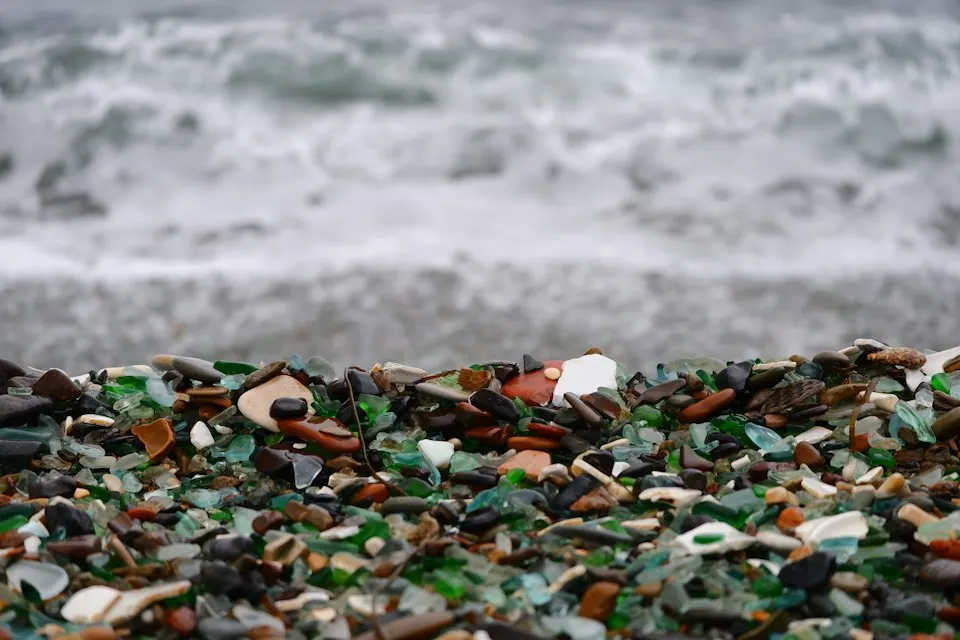
Sea glass is not on the beach in the same amount all the time. The sea buries it and uncovers it again. You see the most in short windows: right after a storm, at low water and in the cold season.
After a storm
Big waves stir the seabed and move glass around, sometimes throwing it high up the beach. Collectors in California put it plainly: the best time is right after a storm and at low tide. On the Antrim coast of Northern Ireland, winter and the days after a north-east storm or swell are considered the best.
Do not go out during the storm. Wait until the waves drop, then go as soon as you can, before others pick over the fresh material. If the beach is groomed by machines, go early, before they start.
At low tide
On ocean coasts the tide decides everything. At low water a band of stones and gravel is exposed, and that is where the glass stays. At Glenarm the advice is to arrive on a falling tide and search within two hours of low water. At Seaham people search at low tide, turning over stones at the water’s edge.
Always check the tide table before you go. Below a cliff the rising tide can cut off your way back, and on flat beaches the water comes in faster than you expect.
Season
In California, winter and spring are the sea glass season. Europe is similar: autumn and winter storms rearrange the beaches, while in summer the sea is calm and sand covers the stones. In winter you also have less competition, because there are fewer people on the beach.
Do not write off summer, though. After every stronger wind it is worth checking the spots by breakwaters and groynes where the waves leave fine gravel.
Where to search on the beach
- Bands of small pebbles and gravel. Glass weighs about the same as small stones, so the waves sort it into the same bands.
- The high-tide line. After a storm, sea glass lies with shells and seaweed in the strandline.
- Corners by breakwaters and groynes. These structures hold back material that the waves move along the shore, as at Aberdeen Beach.
- Wet stones. Frosted glass stands out from stones more clearly when it is wet. Search at the water’s edge or right after rain.
Light helps too. It is easiest under an overcast sky or a low sun that lights the glass from behind. Harsh midday sun creates glare that fools the eye.
How to choose a beach
Sea glass is where people once threw glass away. Good places are beaches near towns and old harbours, near former glass works, dumps, wharves and promenades. Rocky shores hold glass better than sandy ones. They are rarely the prettiest beaches around.
Wind direction matters as well. A beach facing east gets the most material with an easterly wind, and a north-facing beach with a northerly. That is why every spot on our sea glass map has its own direction and its own forecast.
Safety
- Do not follow a retreating wave into the water, especially on beaches open to the ocean. At Davenport the waves can be very large.
- Do not stand below a cliff after a storm. Undercut slopes collapse without warning.
- Stay off breakwaters when waves are breaking.
- On German beaches, do not pick up yellow, waxy lumps. They may be white phosphorus from wartime bombs, which ignites once it dries.
- Bring gloves and a separate bag for sharp glass and litter.
What next
Before you start collecting, read rules and bans. Colours and their rarity are covered in what is sea glass.
Sources
- Adventure Sports Journal: Hunting for Sea Glass
- Seaglass Hunting: Glenarm Beach Sea Glass Guide
- Beachcombing Magazine: How to Find a Sea Glass Beach
- Utopia.de: Meerglas (German)
- Beachcombing Magazine: Davenport, California
- State of Schleswig-Holstein: phosphorus on the beach (German)
Do not miss the next window
The best windows last a few hours: after a storm, after rain, on a clear night with an active Sun. Sign up and we will email you when the index at your spots goes above 60.